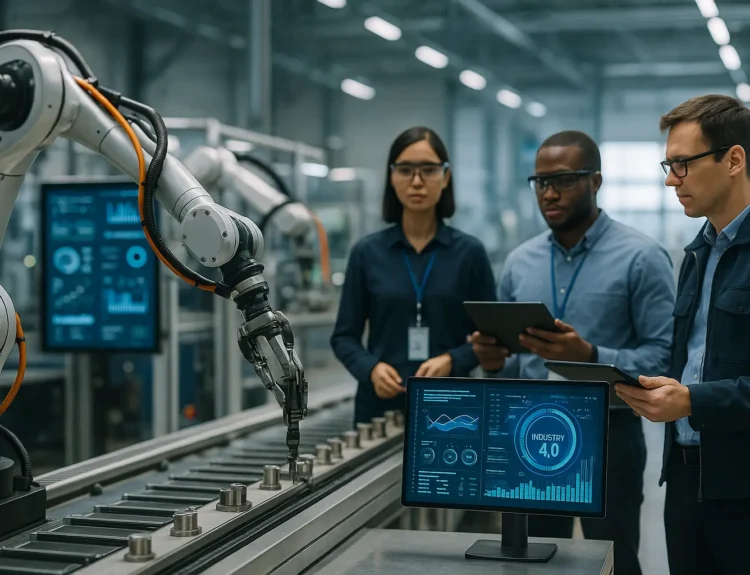
Welcome to an era where the lines between human endeavor and technological prowess are increasingly blurred. This is the age of automation, replete with innovations that promise to enhance efficiency and productivity. However, as we tread this path, it poses critical questions about its impact on jobs, the workforce, and the future of employment. How will these technologies alter the landscape of labor markets? What does this mean for the skills we need? In this modern narrative, we unravel these queries and more, examining the intricate relationship between automation and employment.
The Evolution of Automation and Its Influence on the Job Market
When the word Automation comes to mind, many envision robotic arms and cutting-edge systems performing tasks previously undertaken by humans. Yet, the phenomenon isn’t new. From the Industrial Revolution to the present day, machines have continually transformed the way we work.
It’s important to realize that automation itself doesn’t eliminate jobs; rather, it shifts the demand for certain types of occupations. As machines and technologies evolve, so do the tasks they can handle — from menial, repetitive duties to sophisticated decision-making processes.
In today’s world, data-driven technologies are reshaping the job market in unprecedented ways. Tech giants and startups alike are harnessing the power of automation to streamline operations and enhance productivity. But there’s a dichotomy in this innovation: while some jobs are becoming obsolete, new ones are emerging — roles that require advanced skills and an ability to work alongside cutting-edge technology.
Yet, the impact on the workforce isn’t uniform. Certain sectors, particularly those reliant on manual labor, face significant upheaval. Meanwhile, industries like information technology, robotics, and data analysis are experiencing exponential growth. Understanding this shift is crucial as we navigate the complexities of our modern labor landscape.
The Changing Face of the Workforce: Skills in the Age of Automation
As the tide of automation rises, the nature of work is evolving rapidly, prompting the need for reskilling and upskilling among the workforce. The jobs of tomorrow won’t just require traditional expertise; they will demand a blend of technological savvy, creativity, and problem-solving skills.
The transition to a more automated economy is not just about replacing tasks; it is about enhancing the capabilities of workers by integrating human intuition with machine precision. This shift calls for a paradigm change in how we perceive education and skills development.
In this new landscape, data literacy has become the foundation stone for success. As technologies like artificial intelligence and machine learning take center stage, a deeper understanding of data manipulation and analysis is becoming paramount. Coupled with this is the demand for advanced cognitive skills like critical thinking and creativity, skills that machines are yet to master.
The challenge lies in ensuring equitable access to these new opportunities. Training programs and educational systems must adapt swiftly to equip the current and future workforce with the tools they need to thrive. As we embrace this technological evolution, fostering a culture of lifelong learning and continuous skill enhancement is essential to ensuring no one is left behind. {image_content}
Automation and Its Socioeconomic Impact: A Balancing Act
The rise of automation brings with it a myriad of socioeconomic challenges that society must address. On the one hand, increased automation can lead to greater productivity and economic growth, as businesses can operate more efficiently and at lower costs. On the other hand, there are concerns about job displacement and the widening gap between skilled and unskilled labor.
Central to this debate is the question of equity. As automation transforms industries, it could exacerbate inequalities if not managed carefully. Regions reliant on traditional industries may face higher unemployment rates, while tech-savvy areas may flourish. This disparity calls for thoughtful policy interventions aimed at ensuring a balanced distribution of economic growth.
Furthermore, the societal implications extend beyond the labor market. As work becomes increasingly digitized, there are profound repercussions for social structures, work-life balance, and even the concept of job satisfaction. While automation can alleviate humans from repetitive and physically demanding tasks, it raises questions about the quality of life and job security.
In the face of these challenges, collaboration is key. Governments, businesses, and educational institutions must work together to create a balanced ecosystem that nurtures innovation while safeguarding the interests of the workforce. Striking this balance is crucial to harnessing the potential of automation without compromising social welfare.
Building a Future-Proof Workforce: Strategies and Opportunities
In the journey towards a more automated world, preparing a future-proof workforce is not just a necessity but a strategic imperative. As the nature of work continues to evolve, so too must our strategies to retain relevance in a dynamic job market.
One of the most effective approaches is fostering a culture of lifelong learning. By encouraging continuous education and skill acquisition, workers can adapt to shifting demands and remain competitive. This means offering training programs that focus on technological skills while also nurturing soft skills like communication and teamwork.
Moreover, cross-sector partnerships can play a pivotal role in developing a robust workforce development framework. By collaborating with educational institutions and industry leaders, companies can better align their training methodologies with real-world demands, ensuring that workers are equipped for the challenges of tomorrow.
Another key strategy lies in promoting adaptability and innovation. By fostering an environment that encourages creativity and experimentation, organizations can cultivate a workforce that is not only resilient to change but thrives on it. This necessitates a shift in corporate culture, where employee empowerment and flexibility become core tenets.
As we look ahead, the onus is on us to create an inclusive and forward-thinking environment where individuals are empowered to shape their careers alongside automation. By investing in our human capital, we can ensure that the workforce is not merely surviving but thriving in this new era of technology.
As the world stands on the cusp of a new era, it is imperative that we navigate the challenges of automation with foresight and responsibility. The evolution of technology has never been solely about machines taking over; it’s about enhancing human capabilities and transforming societies for the betterment of all.
By embracing technology while preserving the essence of human creativity, empathy, and innovation, we can create a future where automation and humanity coexist harmoniously. This is not a time to fear; it is a time to seize opportunities, adapt, and flourish. As we stand at this crossroads, the journey is defined not by the technologies we develop but by how we choose to integrate them into our lives.
Together, let us forge a path where automation serves as a catalyst for growth, inclusion, and prosperity, redefining the very essence of work and employment for generations to come.
FAQ
What is the impact of automation on current employment trends?
Automation is transforming industries by increasing efficiency and productivity, but it also leads to job displacement in certain sectors. While some roles are being automated, new opportunities are emerging in technology and innovation-driven fields.
Which sectors are most affected by automation?
Industries such as manufacturing, retail, and transportation are experiencing significant changes due to automation. Routine and repetitive tasks are more susceptible to being automated, whereas jobs requiring complex decision-making or human interaction remain less affected.
How can workers adapt to the rise of automation in the workplace?
Workers can adapt by embracing lifelong learning and acquiring new skills, particularly in areas like digital literacy, problem-solving, and creative thinking. Engaging in continuous education and training programs can help them remain competitive in the evolving job market.
What role does education play in workforce development in the age of automation?
Education plays a crucial role in preparing the workforce for the future. By integrating technology-focused curricula and fostering critical thinking skills, educational institutions can better equip students to thrive in an automated world.
Is there a positive social impact of automation on employment?
Yes, automation can lead to a positive social impact by creating new job opportunities in emerging industries, improving workplace safety by taking over hazardous tasks, and allowing workers to focus on more meaningful and creative activities.